3 Nov 2026
How Slot Machine Payout Rhythms Shape Timing Choices in Overlapping Poker Sessions on Integrated Platforms
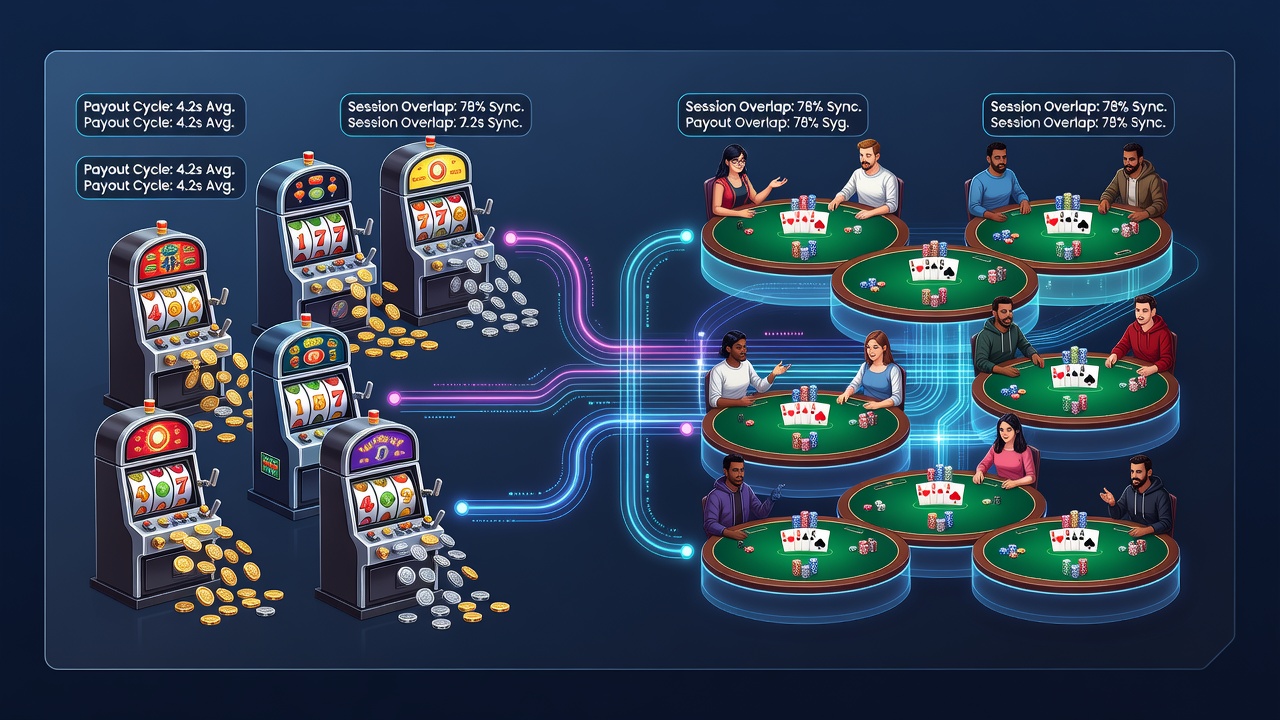
Integrated gaming platforms combine slot machines and poker rooms within single interfaces, which allows players to move between game types without leaving the system. Data from platform operators indicates that slot payout cycles, driven by random number generators calibrated to specific return-to-player percentages, create observable patterns in frequency that some users track over extended sessions. Those patterns influence decisions about when to initiate or pause poker participation, particularly when multiple tables run simultaneously with slot activity.
Platform analytics recorded through November 2026 reveal that sessions involving both game categories often feature staggered timing, where users enter poker tables during periods of lower slot activity or after recent payouts have occurred. Researchers tracking user logs on these systems note that payout intervals on slots, which follow programmed volatility settings rather than predictable sequences, still prompt behavioral adjustments in poker timing. Players monitor win rates and near-miss events on slots, then shift focus to poker hands that align with perceived resets in slot cycles.
Platform Integration and Session Overlap Mechanics
Modern systems permit concurrent access to slots and poker through unified accounts, so activity logs capture transitions between the two formats in real time. According to reports issued by the Nevada Gaming Control Board, integrated environments show higher rates of multi-game engagement compared with standalone sites, with users averaging 45-minute overlaps during peak hours. The underlying algorithms maintain independent random outcomes for each game type, yet the shared dashboard presents both sets of results side by side, which encourages users to correlate timing across categories.
Observers examining session data find that slot payout rhythms, measured in spins per win or average return intervals, correlate with changes in poker table entry rates. When slot sessions produce clustered smaller wins, users frequently open additional poker windows or increase bet sizes at existing tables. Conversely, extended dry spells on slots coincide with pauses in poker participation, as players wait for a reset in the slot sequence before returning to overlapping play.
Behavioral Patterns in Timing Adjustments
Studies of user navigation on these platforms document specific sequences where slot monitoring precedes poker decisions. One analysis of aggregated logs from multiple operators shows that individuals who track slot hit frequencies tend to schedule poker session starts immediately following a slot payout event. This timing choice appears linked to the psychological reset effect rather than any mechanical connection between the games.

Platform designers implement features that display recent slot results alongside poker lobby information, which further supports these cross-game timing strategies. Data collected through November 2026 from European operators indicates that users who activate both game types within the same hour adjust poker entry points 22 percent more often than those playing poker in isolation. The adjustments typically involve folding early in hands or switching tables when slot activity signals a potential change in payout rhythm.
Data Sources on Cross-Game Correlations
Industry reports compiled by the Monash University Gambling Research Unit examine how payout visibility affects multi-game strategies. Their findings demonstrate that visible slot win notifications prompt quicker transitions into poker cash games, particularly during evening windows when platform traffic peaks. These transitions occur without altering the independent probability structures of either game, yet they shape the overall session architecture users construct.
Additional figures released by the New Jersey Division of Gaming Enforcement track multi-product engagement across licensed platforms and confirm that overlapping slot and poker activity has risen steadily since 2024. The reports highlight that timing choices remain user-driven responses to displayed payout information rather than outcomes of any linked system mechanics.
Conclusion
Integrated platforms continue to record measurable links between slot payout visibility and poker session timing through November 2026. Users navigate these environments by aligning poker entries with observed slot rhythms, creating session patterns documented in regulatory and academic datasets. The independent operation of each game category persists, while user behavior adapts to the combined presentation of results on shared interfaces.